
This Case of the Month was contributed by Mary Regan, LMT, BCTMB, CMMP. She recently graduated from SOMI’s Medical Massage Certification Program and now practices Medical Massage in Houston, Texas. The case Mary submitted is a great illustration of the clinical power of the Medical Massage concept. This method of somatic rehabilitation offers the most integrative approach to therapy, allowing practitioners to successfully address various medical conditions using a variety of clinical tools.
There is another important aspect of this submission. Mary correctly understood our message: There is no silver bullet that alone can provide stable clinical results. The solution comes from the combination of treatment tools. Therapists are already using some tools, while they learned others during our seminars. For example, kinesiotaping is a great treatment tool, but only when it is indicated. Mary combined it with MEDICAL MASSAGE PROTOCOLS, and they reinforce each other, creating optimal conditions for the patient’s quick recovery. This is an illustration of the Medical Massage Concept at work, when therapies are combined for the sake of the patient rather than for an intractable system of personal beliefs.
MEDICAL MASSAGE vs. BICEPS BRACHII REHABILITATION AND OTHER AILMENTS
A 53-year-old patient came to see me following a fall. The tendon of the long head of his right biceps had dislocated out of the intertubercular groove. Surgery to reposition and pin the tendon was to be done in several weeks. We had one appointment prior to surgery to prepare the soft tissues for the procedure.
ASSESSMENT
After the surgery, but before the surgeon released his shoulder for any therapy, the patient came back with the following complaints: bilateral aching low back and hip pain which was more intense on the right. He’d had previous surgery to repair a herniated lumbar disc.
The assessment revealed no active Trigger Points in the lumbar erectors, nor was there any pain radiation, and tests for tension around the sacroiliac joint were negative. However, active TPs were present in the quadratus lumborum, piriformis, rotators, gluteus medius and gluteus minimus bilaterally, though worse on the right. ROM in the lower back was greatly restricted.
Session 1
During the first session, I unloaded tension in the soft tissues using a combined Quadratus Lumborum/Piriformis Muscle Syndrome protocol. The patient felt great relief just after one session. The protocol of soft tissue rehabilitation I learned during my CMMP certification, which included an inhibitory regime of massage therapy, fascial work and Trigger Point Therapy combined with electric vibration, was much more effective and comfortable for the patient as well as more efficient for the therapist.
Session 2
At the next session, the patient reported that his back and hip were greatly improved and that the doctor had released him for partial rehabilitation of the shoulder. My goal was to gradually work on the shoulder, arm and chest within the doctor’s limits (until fully released), as well as manage compensatory patterns. I started with relaxation of the paravertebrals in the neck and upper back, and released TPs in the upper trapezius and right splenius capitis, gradually moving toward the shoulder, pectorals, biceps and, finally, back to the shoulder, adding Lymph Drainage Massage.
Session 3
The patient reported a great increase in ROM and a decrease in the intensity of uncomfortable sensations in the lower back and hips. Since he exhibited signs of tension in the anterior scalene muscle (ASM) and a positive Wartenberg’s Test on the right, I added the ASM protocol. He loved this addition, since he said that his neck had never worked so well. The patient continued to gain an average of 10–15 degrees of range of motion in the shoulder joint per session.
Session 4
The surgeon allowed full rehabilitation of the shoulder. At that point, I unleashed the full power of MEDICAL MASSAGE PROTOCOLS. I used a combination of the protocols for pectoral, biceps and triceps tendinitis (stabilizing above the biceps belly and omitting work on the biceps tendon itself). He was able to raise his arm to 120 degrees and put his t-shirt on by himself for the first time.
Session 5
I pushed forward, addressing the rotator cuff muscles. I used most of the Rotator Cuff Syndrome protocol (omitting any steps that put too much tension on the biceps tendons or pressure near the pin location). At this point, he was able to put his hand behind his head.
Thus, in just five appointments after the surgery (4 that included any shoulder work), the patient exhibited such dramatic improvements that his surgeon remarked that the patient was doing far better than the rest of his patients.
During the next three sessions, we continually searched out and addressed other contributing factors that limited specific movements, to enhance what the patient was able to do. It resulted in regaining approximately 95% of his previous range of motion without PT. He has been able to return to the gym without even residual soreness.
MEANWHILE
The patient was so impressed with the effectiveness and time savings the Medical Massage therapy provided that he asked for help with other issues he had. The patient experienced pain in both knees that had been recurring for some time. Evaluation led us to discover low-grade Femoral Nerve Neuralgia with TPs in the rectus femoris and vastus lateralis and with periosteal trigger points at their insertions, but no sensory deficits. I cleared these symptoms using a Femoral Nerve Neuralgia Protocol in a single treatment on the left side and two sessions on the right.
Then he sprained his lateral ankle! I saw him 4 days after the injury – the swelling was almost gone, but he was still in pain and he had a bruise on the lateral surface of the foot. He’d had previous sprains, which were very painful, and took a long time to fully heal. I followed the MEDICAL MASSAGE PROTOCOL for the Sprained Ankle, which emphasizes lymph drainage and friction along and across the involved ligaments. Afterward, I applied kinesiotape, and he felt immediate relief upon standing. The tape enabled him to continue walking normally and avoid aggravating his lower back. By his next appointment, the pain was down to 20-30%, and the third session completed his treatment much more quickly and less painfully than his previous experiences.
Later, I attended a Medical Massage seminar offered by SOMI as part of CMMP certification. The hands-on part of the seminar focused on headaches. My patient mentioned that he also suffered from a low-grade chronic headache (every morning and evening) above the left eyebrow. Other therapies didn’t give him any improvement.
The assessment revealed a classic picture of bilateral Greater Occipital and Minor Occipital Nerve Neuralgias. His headache was reactivated after the first session, but has been much improved since the second session. Right now, we completely control his headache. This reinforced to me the importance of precision of thumb placement during the treatment.
I truly appreciate the wealth of clinical experiences this difficult case has given me since it has refined my Medical Massage skills. Another comment concerns the quality of the MEDICAL MASSAGE PROTOCOLS provided for us by SOMI. They are amazing clinical tools that must be combined and adapted to address each patient with a unique MEDICAL MASSAGE PROTOCOL.
Now that I successfully practice Medical Massage, I fully understand the message constantly emphasized by Dr. Turchaninov during the seminar: the details of evaluation and treatment hold the key to successful somatic rehabilitation. This is why, although I have finished my Certification Program, I plan to continue to attend Medical Massage seminars offered by SOMI for the incredibly valuable information this educational institution offers. I can’t thank SOMI enough for the uniquely effective methods, analytic framework, protocols, and support I received!
ABOUT THE AUTHOR
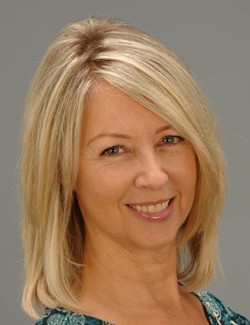
Mary Regan, LMT, BCTMB, CMMP
I attended Ann Arbor Institute of Massage Therapy and have practiced clinical massage (Myofascial Release, Neuromuscular Therapy, Muscle Energy Techniques, Structural Integration, etc.) for 14 years, in Michigan, Chicago, and currently in private practice in Houston.
I have always worked to relieve pain and restore function to the best of my ability while continuously training to improve my knowledge and skills. Learning Medical Massage with Dr. Ross Turchaninov has given me a deeper base of understanding and a more comprehensive method to differentiate and treat various abnormalities. It has significantly improved the results I can achieve with my clients and broadened the situations I feel confident to treat.
I also hold a BA in Management and Organizational Development from Spring Arbor College and provided residential supports for individuals with developmental disabilities for 28 years. I enjoy cooking, playing the piano, Argentine tango, learning, and travel.
Category: Case Studies
Tags: JMS 2016 Issue #1
