
In Part II, Mr. B. Prilutsky shares with our readers a treatment protocol for the management of post-concussion syndrome and prevention of post-traumatic encephalopathy. We think that the information presented in this article is very important for patients and therapists.
Early massage intervention assists in quicker recovery, and by balancing the autonomic nervous system, it reduces the risk of the development of post-traumatic encephalopathy. Therapists who are able to use this protocol will help patients in great need while opening new business opportunities. To read Part I, please see MANAGEMENT OF POST-CONCUSSION SYMPTOMS AND POST-TRAUMATIC ENCEPHALOPATHY WITH MEDICAL MASSAGE. PART I.
MANAGEMENT OF POST-CONCUSSION SYMPTOMS AND POST-TRAUMATIC ENCEPHALOPATHY WITH MEDICAL MASSAGE. PART II
The mainstream approach to the treatment of mild to moderate concussion is “rest and time.” Water pills, pain medication and muscle relaxants are some additional tools. This is partially true – with time and rest, the immediate concussion symptoms go away.
Symptoms like disorientation, dizziness, nausea, sleep disorders and headaches will significantly decrease in intensity during the first 15 to 30 days after a concussion. But nobody can predict to what extent the patient will recover and whether symptoms of post-traumatic encephalopathy might develop, especially if concussions are recurrent.
Thus, it is crucially important to support the patient’s full recovery by all possible means, especially in the early stages after concussion. The moment doctors give the green light, Medical Massage must be included in the rehabilitation. The sooner the therapy is implemented, the quicker and fuller the patient’s recovery will be.
Historically, the MEDICAL MASSAGE PROTOCOL for post-concussion syndrome originated in a tragic accident. In 1963, the famous Soviet boxer and two-time Olympic champion, Valeri Popenchenko, collapsed 24 hours after winning the Soviet Union championship. He was diagnosed with a severe concussion after the fight he had just won.
At that time, the “rest and time” cure was widely implemented. So Valeri was prescribed three weeks of rest, and the immediate post-concussion symptoms indeed disappeared. However, a couple of months after the accident, Valeri noticed that he couldn’t focus and every time he tried to exercise he felt very uncomfortable symptoms of palpitations, sweating and light nausea. In other words, he developed so-called “exercise intolerance,” which in his case meant the end of his boxing career.
At that time his physician was Professor Dembo, who was also a Soviet authority in sports medicine and massage therapy. Professor Dembo started to dig deeper. He assembled a team of colleagues and his graduate students. This group discovered that the first diagnostic biomarkers for the future development of post-traumatic encephalopathy were irregularities in the function of the autonomic nervous system. These irregularities included constant fatigue, fluctuation in blood pressure, irregular heart rate, feelings of upset stomach, increased sweat production, etc. If, after the disappearance of the immediate concussion symptoms, these symptoms remain, there is almost a 100% chance that the patient will later develop encephalopathy of a different degree.
As soon as Professor Dembo realized this correlation, he stopped Valeri’s training and started trying various Medical Massage techniques to find the ideal combination of tools to activate the sensory receptors in the soft tissues as a tool to restore balance in the autonomic nervous system and help Valeri recover.
Within the following six months, Dembo’s team developed the entire treatment protocol for post-concussion rehabilitation, and Valeri’s condition improved tremendously. His focus was restored, he restarted his training and eventually came back to both boxing and later his own scientific career.
Here is the protocol for post-concussion rehabilitation and the rules for its application. The selection of tools and techniques for the MEDICAL MASSAGE PROTOCOL depends on the amount of time elapsed since the concussion.
HYPERMETABOLISM STAGE (2-3 weeks)
Immediately after a concussion, the major goal of the therapy is to increase the CSF movement through the glymphatic system and its drainage into the lymphatic system. Thus, the treatment protocol is a combination of lymph drainage techniques and cerebrospinal fluid drainage techniques. These first two steps can be applied immediately after head trauma.
Successful drainage of excessive CSF decreases the intracranial pressure with a subsequent lessening of clinical symptoms such as nausea, headaches, blurred vision, etc. An equally important outcome of Medical Massage therapy for these patients is the restoration of cerebral perfusion, which in turn prevents the development of degenerative changes associated with post-traumatic encephalopathy.
Attention: under normal circumstances any steps of the protocol described below shouldn’t trigger any uncomfortable reactions. However, for post-concussion patients, especially after recent trauma, some steps may trigger unpleasant autonomic reactions such as increased head pressure, headache, nausea, etc. If patients report any similar problems, immediately decrease the intensity of therapy or cease this particular step altogether until the patient can tolerate it. Observe and use your clinical judgment.
Acceleration of CSF drainage
Step 1. Repetitive Pumping-Tractions
Lift the client’s head carefully with the right hand and grab the neck with the left hand so that four fingers are on one side of the neck and the thumb on its other side. Then, while continuing to hold the neck with the left hand, place the ulnar part of the right hand on the forehead along the frontal sinuses (see Fig. 1).
Once the hands are in position, ask the client to exhale and apply slow repetitive pumping-like tractions along the axis of the spine. During the pumping tractions the left hand simultaneously applies repetitive neck compressions with the same frequency. Also, during each traction, the right hand directs traction backward from the area of the frontal sinus toward the top of the head. The right and left hands could be switched depending on the therapist’s preference.
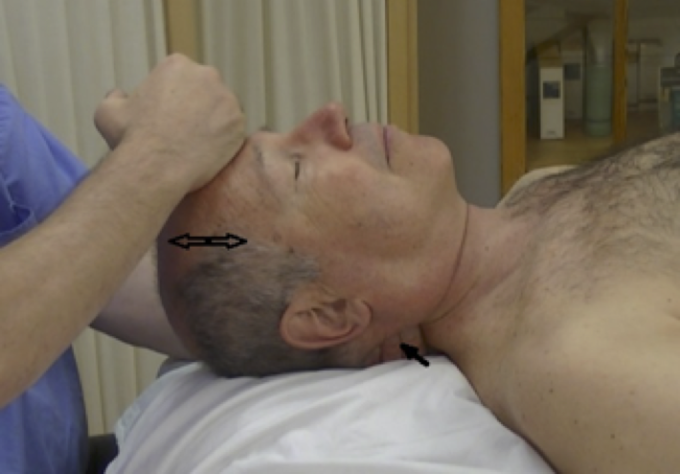
Double arrow – repetitive pumping-like tractions
Solid arrow – simultaneous neck compressions
Step 2. Repetitive Compressions on the Head and Face
The compression has to be applied with gradually increased pressure to the first threshold of any discomfort (see Fig. 2). Sustain this pressure on each point for approximately 15 seconds. Pressure should be combined with light manual vibration. Repeat 15 seconds of compression on all proposed areas for the next 10 minutes.
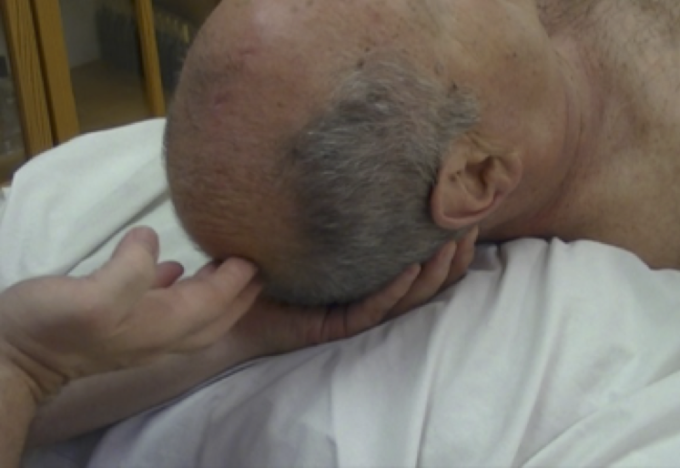
Step 3. Head Compressions
Dr. Ross Turchaninov suggested that I additionally stimulate the glymphatic system with very gentle, bimanual repetitive compressions of the skull using soft parts of both palms. The hands are placed on the opposite sides of the head and the head is gently compressed 3-4 times during the client’s long, slow exhalation. Areas for hand placement are shown in Fig. 3. On numerous occasions I have incorporated this proposed technique into Prof. Dembo’s original protocol and it contributed to faster recovery.
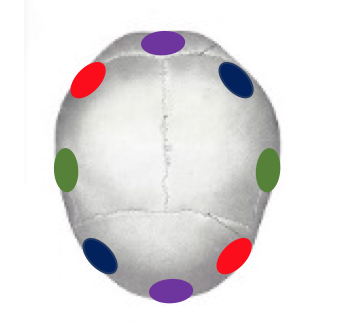
Hands for the bimanual compressions should be placed in the areas of matching color
Step 4. Pumping Compression on Lateral Neck
The client is positioned on the side. Adjust a towel/pillow so that the neck is well supported and level in a horizontal position. Place the ulnar edge of the palm closer to C1. Place four fingers of the other hand in a half grip so the fingertips are aligned in a chain. Place both hands perpendicular to the neck, next to each other. Avoid shaking, especially during the first five treatments.
Using both hands at the same time, apply careful pumping strokes on the lateral neck (see Fig. 4). Use light pressure and be sure that each stroke has a slightly circular motion. Re-apply similar strokes along the entire lateral neck for one and a half minutes. If the patient can tolerate it, gradually increase pressure. Turn the client’s head to the other side and apply the same therapy on the opposite side of the neck.
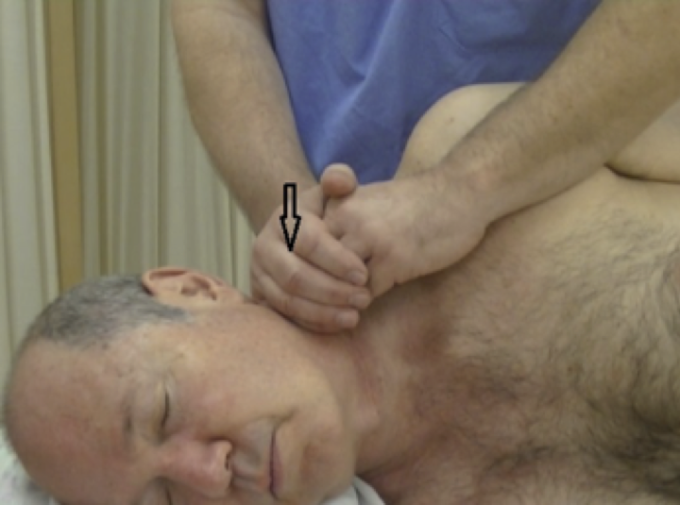
Acceleration of Lymph Drainage
Step 1. Thoracic Pump Technique
Frequently, even after a moderate concussion, the client may feel nausea and dizziness during deep inhalations/exhalations. However, the use of the client’s active inhalation is an important tool to accelerate lymph drainage and eventually CSF drainage. This is why the Thoracic Pump Technique is such an important treatment tool.
During each inhalation, the diaphragm contracts and descends while additionally decreasing intra-pleural pressure. The drop in the intra-pleural pressure helps to stream air into the lungs, but it is also the main driving force for lymphatic circulation. It pulls lymph through the lymphatic system, while it is cleaned in the lymph nodes, all the way through until clean lymph is returned into venous circulation. As we discussed in Part I of this article, the emptied lymphatic system of the head and neck in turn allows the CSF to be drained from the brain.
The client lies on his/her back. Place your hands against the sternum (see Fig. 5). Ask your client to inhale and exhale. At the time of inhalation, gently resist the expansion of the rib cage, applying pressure which the client should overcome while expanding his/her thoracic cage during inhalation. Release the pressure at the end of exhalation and follow the rib cage until it completely collapses before a new inhalation effort. Repeat resistance to the thoracic cage expansion 5 times.
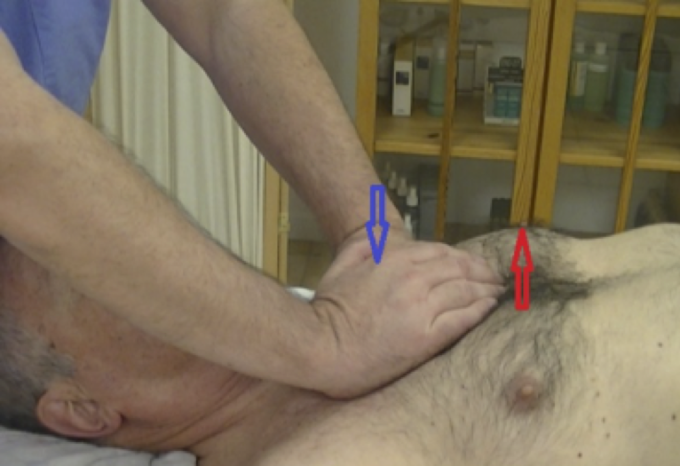
Blue arrow – chest compression
Red arrow – chest expansion against resistance
Even gentle resistance to thoracic cage expansion demands a stronger contraction of the diaphragm, which additionally lowers intra-pleural pressure, stimulating lymph drainage and eventually CSF movement. Be sure to use the Thoracic Pump Technique only after the client allows the therapist to engage active inhalations as a part of the therapy.
Step 2. Supraclavicular Pump Technique on the Left
Ask your client to turn her/his head to the right. Place your hand in the left supraclavicular area at the junction of the thoracic duct and the brachiocephalic vein. Apply pumping strokes there, trying to fit 3-4 strokes into one exhalation of the client. Repeat these techniques for 3 minutes.
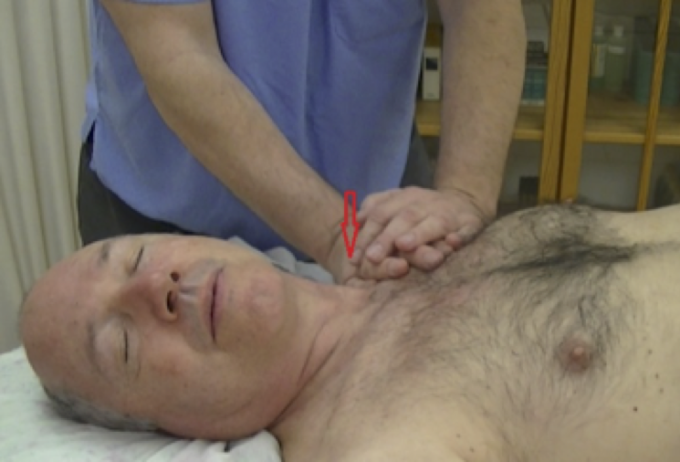
Step 3. Supraclavicular Pump Technique on the Right
Ask your client to turn her/his head to the left. Place your hand in the right supraclavicular area at the junction of the right lymphatic duct and the superior vena cava. Apply pumping strokes there, trying to fit 3-4 strokes into one exhalation of the client. Repeat these techniques for 3 minutes.
Step 4. Abdominal Pump Technique
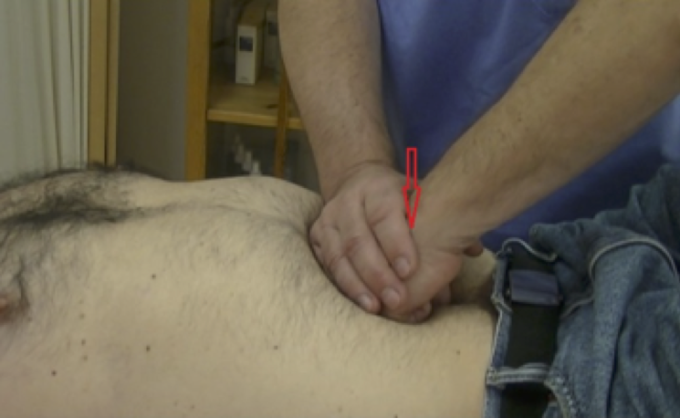
The Abdominal Pump Technique, like the Thoracic Pump Technique, is a very important driving force for stimulation of the entire lymphatic system. The largest lymphatic vessels, including the cisterna chyli, are located at the level of the navel, and the application of the Abdominal Pump Technique accelerates movement of the lymph into the thoracic duct and it secondarily increases CSF drainage. Make a fist and place it in the area of the navel as shown in Fig. 7. During the client’s prolonged exhalation, perform 3-4 gentle pumping strokes with moderate pressure. Repeat Abdominal Pump technique for 3-5 minutes.
The protocol presented above should be implemented during the Hypermetabolism Stage for approximately the first 7-10 sessions, with a total duration for each session of approximately 35-40 minutes.
HYPOMETABOLISM STAGE (after 3 weeks)
The acceleration of CSF’s movement through the glymphatic system and increase of lymph drainage decrease the intracranial pressure and restore the arterial blood supply to the brain and its venous drainage. Thus, the success of the first stage of the therapy coincides with the disappearance or significant reduction of the initial symptoms which appeared after concussion.
From this point, the treatment enters the second stage, which now targets the imbalance within the autonomic nervous system triggered by the concussion. As I mentioned above, this imbalance and its symptoms are a biomarker and one of the contributing factors to the development of post-traumatic encephalopathy.
Autonomic irregularities are among the first outcomes of Post-concussion Encephalopathy. Unfortunately, they greatly interfere with the restoration of cerebral circulation, and overall this affects the brain’s recovery from acute trauma, contributing to the future development of encephalopathy. Thus, for therapists it is extremely important to understand the equal importance of accelerating cerebrospinal fluid drainage and restoring the balance between the sympathetic and parasympathetic divisions of the autonomic nervous system. I believe that such an integrative approach will help deliver quick and stable clinical results.
The simplest effective method to balance the activity of the sympathetic and parasympathetic divisions of the autonomic nervous system is a full-body massage applied with special rules and in a special sequence. The fact that massage therapy affects and balances the autonomic nervous system was confirmed by several Western studies (Barr and Taslitz, 1970; Longworth, 1982). Watch Full Body Stress Management Massage – YouTube to see the full-body massage session used to balance the autonomic nervous system.
Each session starts with the toes, and when working on the upper extremities, the therapist should concentrate on the fingers. This is the first step which affects the autonomic nervous system. Feet and hands are the most distal parts of the body from the centers (brain and heart) and they are at the very end of the capillary network which is greatly affected by the force of gravity. There are scientists who even consider the feet and hands to be the reflex zones of the entire cardiovascular system (Chernigovsky, 1980). Some massage modalities like Pericardic Massage are based on this fact (Akmedzhanov et al., 1981).
The usual duration of a full-body massage session is 45 minutes. The CSF and Lymph drainage techniques should be continued, but their application should be shortened to 15 minutes. Thus, one hour of therapy should include the initial application of CSF and Lymph Drainage techniques for 15 minutes, followed by the addition of full-body massage for 45 minutes.
CONCLUSION
Professor Dembo detected that irregularities in the function of the autonomic nervous system are biomarkers for the future development of post-traumatic encephalopathy and proposed treatment options based on the application of massage therapy.
Today, more than fifty years later, researchers have supported his theory with clinical data. A research team at Mayo Clinic in Scottsdale, Arizona, reached the same conclusions as Prof. Dembo in the 1960s: Autonomic Dysfunction and Concussion – Mayo Clinic – YouTube
REFERENCES
- Akmedzhanov MY, Leshchinskaya NP, Arkhangelsky VV, Guz SY, Afanasieva MS, Sokolov BA. Pericardic massage and its adaptive effect in rehabilitation therapy with dosed physical exercises in patients who had myocardial infarction. Vopr Kurortol Fizioter Lech Fiz Kult. 1981;(4):21-23.
- Ballatore C, Lee VMY, Trojanowski JQ. Tau-mediated neurodegeneration in Alzheimer disease and related disorders. Nat Rev Neurosci. 2007;8(9):663-672. doi:10.1038/nrn2194
- Barr JS, Taslitz N. The influence of back massage on autonomic functions. Phys Ther. 1970;50(12):1679-1691. doi:10.1093/ptj/50.12.1679
- Bergsneider M, Hovda DA, Lee SM, et al. Dissociation of cerebral glucose metabolism and level of consciousness during the period of metabolic depression following human traumatic brain injury. J Neurotrauma. 2000;17(5):389-401. doi:10.1089/neu.2000.17.389
- Blumbergs PC, Scott G, Manavis J, Wainwright H, Simpson DA, McLean AJ. Staining of amyloid precursor protein to study axonal damage in mild head injury. Lancet. 1994;344(8929):1055-1056. doi:10.1016/S0140-6736(94)91712-4
- Boden BP, Tacchetti RL, Cantu RC, Knowles SB, Mueller FO. Catastrophic head injuries in high school and college football players. Am J Sports Med. 2007;35(7):1075-1081. doi:10.1177/0363546507299239
- Breslow JM. 76 of 79 deceased NFL players found to have brain disease. FRONTLINE. Published September 30, 2014. Accessed August 16, 2026. https://www.pbs.org/wgbh/frontline/article/76-of-79-deceased-nfl-players-found-to-have-brain-disease/
- Chernigovsky VN. Interoreceptors. Meditsina; 1980.
- Cifu DX, Drake DF, Steinmetz BD. Repetitive head injury syndrome. Medscape; 2014. Accessed August 16, 2026. https://emedicine.medscape.com/article/1163653-overview
- Giza CC, Hovda DA. The neurometabolic cascade of concussion. J Athl Train. 2001;36(3):228-235.
- Longworth JCD. Psychophysiological effects of slow stroke back massage in normotensive females. Adv Nurs Sci. 1982;4(4):44-61. doi:10.1097/00012272-198207000-00006
- Louveau A, Smirnov I, Keyes TJ, et al. Structural and functional features of central nervous system lymphatic vessels. Nature. 2015;523(7560):337-341. doi:10.1038/nature14432
- McKee AC, Daneshvar DH. The neuropathology of traumatic brain injury. Handb Clin Neurol. 2015;127:45-66. doi:10.1016/B978-0-444-52892-6.00004-0
- Meyer KS, Marion DW, Coronel H, Jaffee MS. Combat-related traumatic brain injury and its implications to military healthcare. Psychiatr Clin North Am. 2010;33(4):783-796. doi:10.1016/j.psc.2010.08.007
- Mutch WAC, Ellis MJ, Graham MR, et al. Brain MRI CO2 stress testing: a pilot study in patients with concussion. PLoS One. 2014;9(7):e102181. doi:10.1371/journal.pone.0102181
- Nedergaard M. Garbage truck of the brain. Science. 2013;340(6140):1529-1530. doi:10.1126/science.1240514
- Xie L, Kang H, Xu Q, et al. Sleep drives metabolite clearance from the adult brain. Science. 2013;342(6156):373-377. doi:10.1126/science.1241224
- Yamakami I, McIntosh TK. Effects of traumatic brain injury on regional cerebral blood flow in rats as measured with radiolabeled microspheres. J Cereb Blood Flow Metab. 1989;9(1):117-124. doi:10.1038/jcbfm.1989.16
ABOUT THE AUTHOR
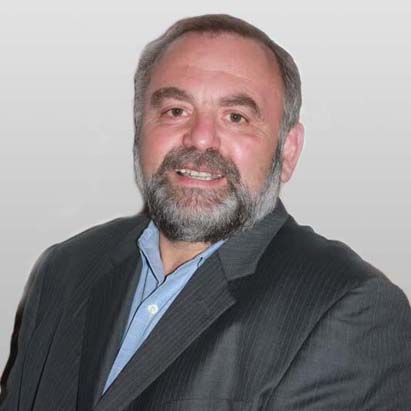
Boris Prilutsky, LMT, MA
Mr. Prilutsky has practiced and taught Medical and Sports Massage for more than 40 years. He has a master’s degree in physical education and rehabilitation from Ukraine. Mr. Prilutsky has worked with athletes and world dignitaries throughout Europe, Israel and the USA.
Over the last 3 years, he has noticed a significant increase in the number of post-concussion patients in his clinic. Mr. Prilutsky understands the great need for therapists to handle these patients’ rehabilitation correctly and now he shares his clinical expertise with therapists in JMS and nationally. Learn more about his educational projects in Boris Prilutsky – Medical Massage Training DVDs – Boris Prilutsky – Medical Massage Training DVDs.
Category: Medical Massage
Tags: JMS 2016 Issue #3
