
This Case of the Month was submitted by Sally Ramsey, LMT, BBA, from Massage Therapy Connections in Sarasota, Florida. Under the leadership of our former student Shea Shulman, CMMP, LMT, who tirelessly works with her practitioners to elevate their clinical skills, this clinic fully embraces and effectively practices Medical Massage.
Sally is one of those therapists who expanded her practice and professional horizons into the Medical Massage field. The complex clinical case she sent to JMS illustrates the power of Medical Massage, Sally’s professional skills and the advantage of the teamwork which is strongly advocated by Shea Shulman. We wish more clinics like Massage Therapy Connections would embrace Medical Massage and be able to help patients with various somatic abnormalities.
MEDICAL MASSAGE vs. CONSEQUENCES OF HIP REPLACEMENTS
The client was a 70-year-old male who came into our Medical Massage clinic in Sarasota for a shoulder evaluation due to pain there. However, during the interview, he mentioned that his major problem was bilateral hip pain, but since he had a very complicated situation, he had lost all hope and came to the conclusion that he must live with this pain. The head of our Medical Massage Clinic, S. Shulman, CMMP, LMT, assisted me with the initial evaluation and testing.
HISTORY OF PRESENT ILLNESS
In December of 2013, the client underwent a total right hip replacement. Several years prior, his left hip had been partially replaced, but in April of 2014, his left endoprosthesis broke, and a new one had to be put in, this time as a total hip replacement.
In February of 2016, the client developed a left hip infection, which led to sepsis, and he almost completely lost his leg. His infection was cured with intense antibiotic therapy, but he almost lost the ability to bear any weight on the left hip. As a result of the uneven distribution of weight, he developed severe pain in the right hip as a compensatory reaction.
INITIAL ASSESSMENT AUGUST 2016
Although I was a novice Medical Massage practitioner, I was inspired and motivated by the complexity of this client’s case and completely trusted the MEDICAL MASSAGE PROTOCOLS from SOMI for an effective solution!
Initial complaints were chronic bilateral hip and leg pain (level 7-8) with severe restriction of ROM.
The Right Hip – limited lateral rotation and flexion. The maximum rotation the client could exhibit was placing the right foot midway between the left ankle and knee. Further lateral rotation was very painful.
The Left Hip – virtually no lateral rotation or flexion. The left foot could be placed just slightly above the right ankle.
The area of sensory deficit was approximately 1.5” x 5” near the upper portion of the rectus femoris and vastus lateralis. The skin in this area was cool to the touch, and at the same time, the client experienced complete numbness there. As a test, I used cupping in this area, and it didn’t change the intensity of the symptoms, since the treatment didn’t trigger peripheral vasodilation and didn’t bring blood to the area. All of this indicated that the client also had symptoms of irritation of the femoral nerve.
He had almost every trigger point that could exist active, from the Quadratus Lumborum to the gluteal muscles, including the piriformis and quadriceps along with the hamstring muscles. In both feet, the client exhibited symptoms of Plantar Fasciitis, but on the right foot, a periosteal trigger point was detectable on the heel bone.
It should be noted that this client was extremely cooperative. When home instructions were given, he followed them exactly (Epsom salt bath, movements in the water, passive stretching). I also suggested he contact his orthopedic surgeon before our sessions started, so that I would be informed of any limitations with his artificial joint.
His primary goal was to reduce pain and to be able to put his shoes on without enlisting his wife’s help. His secondary goal was to be able to scuba dive again.
Being uncertain as to how many sessions it might take to achieve stable clinical results, I initially asked for 2 sessions per week for 4 weeks. I also educated him on the cumulative effect of treatment in which results build up from session to session until healing.
TREATMENT
The focus of the first 2 weeks was removing any fascial restrictions and restoring the anatomical length of the gluteal, thigh and leg muscles. To accomplish that, I worked on the superficial and deep fascia, used kneading, passive stretching, Trigger Point Therapy and Postisometric Muscular Relaxation on skeletal muscles and addressed the area of sensory deficit in the skin with Mobile Cupping.
A 50% pain reduction (to level 3-4) was accomplished after the first two sessions. It remained at that level until all TRPs were eliminated. At the end of the second week, the pain level dropped to 1 or 2.
After 2 weeks, the area of sensory deficit reduced to a 4” section, and the client remarked that he had started occasionally feeling a tingling sensation in the area of numbness. That was a positive sign towards the restoration of femoral nerve function.
After 2 months of treatment, the area of sensory deficit shrank to approximately 1”. At the same time, it was no longer cool to the touch, and blood flowed freely after cupping was performed. By December 2016, the area of sensory deficit had completely healed!
By the end of September of 2016, once pain was removed from the picture, he was able to climb 3 flights of stairs and walk 1-2 miles two times per week. His surgeon saw him for a follow-up and was very pleased with the results of our work. His wife said that I gave her back her husband.
RESULTS OF MEDICAL MASSAGE THERAPY
- Pain elimination
- No sensory deficit and complete restoration of femoral nerve function
- Walking without support for 2-3 miles
- Right hip rotation and flexion: he could put his shoes on without any help
- Left hip rotation and flexion: the client could place his foot midway between his knee and ankle.
He and his wife went scuba diving this past June!
ABOUT THE AUTHOR
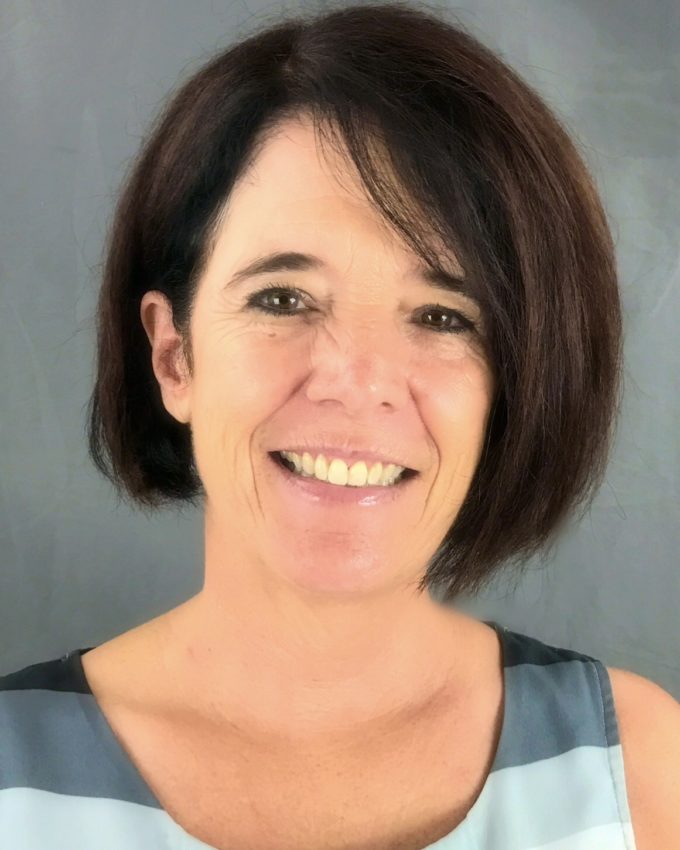
Sally Ramsey, LMT, BBA
Having moved from Georgia a few years ago, I am delighted to call Sarasota home. My work is described as intuitive and problem-solving, blending art with science. As a 2-year student of SOMI Medical Massage, I find it exciting to build my practice upon proven techniques, and I am most appreciative of the mentoring and support. I have a passion for serving those overcoming obstacles and have found the MEDICAL MASSAGE PROTOCOLS most effective!
Massage Therapy Connections
Category: Case Studies
Tags: JMS 2017 Issue #3
