
Originally, we planned to finish the discussion about TMJ dysfunction in the TEMPOROMANDIBULAR JOINT DYSFUNCTION. PART III: Medical Massage Protocol article in the Journal of Massage Science. However, after the publication of Part III of our article in the previous issue of JMS, we received a letter from a reader from Australia, and we think that his concerns must be addressed. Other readers may have similar opinions, and we would like to clarify the treatment of TMJ dysfunction we have advocated. We also think this letter has a broader meaning for the practitioners who engage in the clinical aspects of massage therapy. Here is the original letter from our Australian reader:
“Your article on TMJ dysfunction and treatment was very disappointing. Not once in the article did you mention the treatment required for the body below the neck and head to establish a stable foundation for the neck and jaw.
The scientific approach of treating the symptoms and local area only is way out of date. Dysfunction in the neck first starts in the pelvis and spine, and any localized treatment will provide short-term relief at best.”
S.L.
The reader was absolutely right: the MEDICAL MASSAGE PROTOCOL discussed in Part III didn’t contain any references to addressing the imbalance of the feet, pelvis, lower back, or middle back. We did it on purpose for several reasons, and after careful analysis of the medical sources and many clinical cases in our clinic.
We are well aware that, from textbook to textbook or from seminar to seminar, practitioners are exposed to the concept of restoring balance in the lower parts of the body to eliminate TMJ dysfunction. To some degree, it has become a standard clinical approach in many chiropractic, physical therapy, or massage therapy clinics. Some practitioners were taught to address postural imbalance first and later, when it was corrected, work on the TMJ itself. Some were taught to work on postural imbalance and TMJ at the same time.
At the very beginning, we may ask two very simple questions: ‘Where did the idea of postural imbalance as an initial trigger of TMJ dysfunction originate?’ and ‘How exactly are postural abnormalities linked to TMJ dysfunction?’
Where did the idea of postural imbalance as an initial trigger of TMJ dysfunction come from?
The answer to this question can be traced back to an original paper published by Travell and Rinzler in 1952. As we discussed in Part I, Dr. J. Travell was among the first scientists who firmly established the muscular origin of TMJ dysfunction and its clinical correlation with facial pain and headache. Indeed, in her publications, including the Trigger Point Manual, Dr. Travell mentioned the necessity of addressing active trigger points in other parts of the body if they were associated with TMJ dysfunction. She mentioned this information in ‘Other Measures’ in her main publication, the Trigger Point Manual.
However, in her publications, there is no mention that postural imbalance is the definite cause of TMJ dysfunction. However, she considered postural changes to be one of the possible contributing factors. Travell’s publications were always very respected by anyone who was involved in somatic rehabilitation.
The idea of postural imbalance as an initial trigger in the development of TMJ dysfunction originated in the chiropractic community in the 1970s, and it made sense at that time. The logical outcome was that restoring postural balance would eliminate TMJ abnormalities. As a result, countless chiropractic clinics started to offer patients the chance to get rid of TMJ problems through the slow restoration of postural balance. We have heard many stories from our patients who went through 15 and even 30 sessions of such treatments without any major improvement in the clinical picture of TMJ dysfunction. From the chiropractic community, this concept spread to the massage community, where it was already accepted as an established clinical fact. Massage educators immediately incorporated this idea into their various protocols, and this concept became widespread.
In fact, massage practitioners had better luck with this concept (compared to the chiropractic treatment) because they spent more time working on the TMJ itself. However, the concept that without restoring postural balance, it is impossible to achieve stable clinical results in the treatment of TMJ dysfunction continues to wrongly dominate therapy rooms despite the fact that it has been abandoned by the medical community. This is the exact view that our Australian reader mentioned in his letter.
How exactly are postural abnormalities linked to TMJ dysfunction?
Now, we would like to address the second question: How exactly are postural abnormalities, especially in the lower body, linked with TMJ dysfunction? Yes, there are a number of scientific papers that convincingly showed that patients with TMJ dysfunction exhibited various postural abnormalities (Santoro et al., 1989; Zonnenberg et al., 1996; Fischer et al., 2009). The health news and media also played a role in disseminating this information to the general population.
However, if we dismiss the media articles as well as the personal opinions of various educators and rely strictly on an analysis of credible scientific publications, we will find that even the strongest proponents of the idea that postural abnormalities are the cause of TMJ dysfunction carefully avoided any categorization.
For example, the authors of a widely cited study (Zonnenberg et al., 1996) on this subject investigated whether body posture could be a trigger of abnormalities in the temporomandibular joint. After examining the obtained data, the authors concluded that:
“The results suggest a somatic basis for the observed postural imbalances in patients with temporomandibular disorders. These results, however, must be interpreted with reservation [bold by JMS]”.
This is a widely cited reference used by many massage educators; however, upon careful reading of the original passage, it becomes apparent that the authors did not interpret their findings as a clinical justification for treating postural abnormalities as the primary cause of TMJ dysfunction. Unfortunately, many authors, educators, and therapists did exactly that.
However, so far we haven’t answered one reasonable question: How do we explain the presence of postural abnormalities in patients with TMJ dysfunction? It is an established clinical fact. The answer to this hypothetical question consists of three parts.
1. Some patients are simply misdiagnosed
The most common mistake health practitioners make is to diagnose TMJ dysfunction on the grounds that the patient has a combination of headache and clicking in the TMJ. If the Three Knuckle Test is negative and mouth opening is painless, while a clicking noise or sensation is present, the patient’s headache is a result of another cause. Another example is the anterior tilt of the pelvis, which is registered in some patients with TMJ dysfunction. However, the patient may have the same anterior tilt as a result of a minor problem with lumbar disk(s), and in early stages, the patient doesn’t have any symptoms yet, while the brain has already reacted with a protective anterior tilt. These clinical cases are pure coincidences of similar symptoms with different origins.
Let’s suppose that the practitioner treats this patient with the MEDICAL MASSAGE PROTOCOL, which, of course, is not indicated in this case, and the patient doesn’t get the expected headache relief. For the practitioner who is desperate for results and an explanation, the idea of postural imbalance becomes a great explanation for the failure of TMJ therapy. However, the attempt to correct the postural balance for this patient will simply delay the moment when the patient stops seeing the practitioner.
2. In a minority of patients, the postural changes may directly contribute to TMJ dysfunction
Usually, these patients have had significant deformities for an extended period of time. For example, patients with scoliosis or leg shortening often develop TMJ dysfunction later in life. However, those patients must have had these structural abnormalities for a long period of time, and these pathological conditions may be another contributing factor to TMJ dysfunction. We see many patients with scoliosis in our clinic, but this group of patients has only a slight prevalence of TMJ dysfunction.
3. The majority of patients with TMJ dysfunction have postural changes developed as a consequence of chronic pain in the TMJ
We would like the readers to fully understand the meaning of this sentence. It is not postural changes that are causing TMJ dysfunction (which many practitioners were forced to believe) and require immediate treatment, but it is completely the other way around: postural changes and somatic dysfunctions are secondary, reflex brain reactions which must be addressed separately AFTER proper decompression of the TMJ with a medical massage protocol and restoration of the patient’s normal bite.
If postural changes were a cause of TMJ dysfunction, then this problem would already have been solved by chiropractors and massage therapists, since this concept has dominated therapy rooms for a long time. However, in real life, the facial pain caused by TMJ tension remains as elusive as before. From this point of view, there is something wrong with the initial theory of postural changes as a cause of TMJ dysfunction.
There is a growing number of studies that have questioned established views and shown that a careful analysis of data didn’t find statistically significant proof that postural changes in the middle and lower segments of the body are the actual cause of TMJ dysfunction (Hagberg, 1991; Michelotti et al., 1999; Munhoz and Marques, 2009). As Michelotti et al. (1999) stated:
“…it’s not advisable to treat postural imbalance by means of occlusal [i.e., TMJ by JMS] treatment or vice versa.”
Let’s put everything into a logical perspective. The patient indeed suffers from TMJ dysfunction. In such cases, the patient suffers from chronic facial pain and headaches (see Part II of our article in the September-October issue of JMS). Any activation of the pain-analyzing system will alter the body posture and create an imbalance within the soft tissues that control joint function. This is a clinical fact. Observe the gait of a patient with a simple toothache, and you will see how much his or her body posture has changed. The longer the patient suffers from pain of any origin, the more pronounced and habitual the postural changes become.
These changes are not under the patient’s voluntary control, but they are rather the reflex reaction of the motor cortex to the chronic pain stimuli. This reflex reaction has only one goal: to adjust the entire body to diminish the constant flow of sensory stimuli that triggers pain formation within the brain. Thus, this is the brain’s self-protective mechanism to mitigate overstimulation.
For this patient, the key to restoring health is to eliminate the initial source of the pain stimuli (i.e., TMJ dysfunction) rather than address his or her pelvic tilt, which is a consequence of the initial TMJ problem. By addressing the TMJ itself, the practitioner cuts the gas line that supplies the fire of secondary postural changes.
The last issue is what to do with those postural changes that have formed in the patient’s body as a response to the TMJ dysfunction. First of all, the practitioner must fix the TMJ dysfunction and realign the affected joint. This isn’t even a matter for discussion. The practitioner must do whatever it takes to control the pain-analyzing system. The MEDICAL MASSAGE PROTOCOL we discussed in Part III of our article (see TEMPOROMANDIBULAR JOINT DYSFUNCTION. PART III: Medical Massage Protocol article in JMS) usually takes 4-5 sessions to relieve tension in the TMJ. After the practitioner has succeeded and the TMJ function is properly restored, give the patient a 2-3 week break and ask him or her to combine daily self-treatments (see Part III of the November-December issue of JMS) with daily light repetitive exercises: for example, low-impact cardio on elliptical-type machines or water aerobics. This period will be enough to address the residual postural abnormalities. After 2-3 weeks, re-evaluate the patient, and if additional treatment is needed to address, let’s say, a pelvic imbalance, inform the patient and act accordingly.
A couple of final thoughts. There are many textbooks, DVDs, and seminars that instruct practitioners on how to treat TMJ dysfunction or other somatic abnormalities. However, the majority of practitioners don’t realize that even the best recommendations or protocols (including our Video Library) are just frameworks for clinical application. If the practitioner would like to be clinically effective in the majority of cases, he or she must see outside of this framework, incorporating various clinical tools that fit the patient’s needs. This is why the practitioner should use educational materials wisely and not be afraid of challenging the system of established beliefs. This is especially true for massage therapy, where there are no unified views on the treatment of various pathological conditions, and such an unscientific approach to the medical aspects of massage therapy additionally confuses practitioners in the field.
SOMI invites all therapists who would like to step into the exciting and rewarding field of Medical Massage to join our Medical Massage Certification program: Medical Massage Courses & Certification
REFERENCES
- Fischer MJ, Riedlinger K, Gutenbrunner C, Bernateck M. Influence of the temporomandibular joint on range of motion of the hip joint in patients with complex regional pain syndrome. J Manipulative Physiol Ther. 2009;32(5):364-371. doi:10.1016/j.jmpt.2009.04.003
- Hagberg C. General musculoskeletal complaints in a group of patients with craniomandibular disorders: a case-control study. Swed Dent J. 1991;15(4):179-185.
- Michelotti A, Manzo P, Farella M, Martina R. Occlusion and posture: is there evidence of correlation? Minerva Stomatol. 1999;48(11):525-534.
- Munhoz WC, Marques AP. Body posture evaluations in subjects with internal temporomandibular joint derangement. Cranio. 2009;27(4):231-242. doi:10.1179/crn.2009.034
- Santoro F, Maiorana C, Geirola R. Neuromuscular relaxation and CCMDP: Rolfing and applied kinesiology. Dent Cadmos. 1989;57(17):76-80.
- Travell JG, Rinzler SH. The myofascial genesis of pain. Postgrad Med. 1952;11(5):425-434. doi:10.1080/00325481.1952.11694280
- Travell JG, Simons DG. Myofascial Pain and Dysfunction: The Trigger Point Manual. Williams & Wilkins; 1983.
- Zonnenberg AJ, Van Maanen CJ, Oostendorp RA, Elvers JW. Body posture photographs as a diagnostic aid for musculoskeletal disorders related to temporomandibular disorders. Cranio. 1996;14(3):225-232. doi:10.1080/08869634.1996.11745972
ABOUT THE AUTHORS

Dr. Ross Turchaninov
Dr. Turchaninov graduated with honors from the Odessa Medical School in Ukraine in 1982. He was admitted to the residency program of the Kiev Scientific Institute of Orthopedy and Rehabilitation, which he completed in 1985.
After his residency, he worked as a physician at the Clinical Hospital of Department IV of the Ukrainian Ministry of Public Health and as a supervisor of the rehabilitation program for the Ukrainian Ministry of Public Health.
In 1989, Dr. Turchaninov obtained his PhD degree in medicine, and in 1990, he graduated from the Kiev Scientific Institute of Orthopedy and Rehabilitation’s manual therapy and medical massage programs designed for physicians.
In 1992, Dr. Turchaninov was invited to work in rehabilitation centers in New York City and Scottsdale, Arizona, as head of their medical massage program.
He lectures in the U.S. and abroad on issues of manual therapy and medical massage and is regularly invited to speak at American and international conferences.
Dr. Turchaninov is the author of more than 100 scientific papers and publications in both European and American medical journals. He is the author of three major textbooks: Medical Massage, Volumes I and II, and Therapeutic Massage: A Scientific Approach.
He is the founder of the Science of Massage Institute, dedicated to bringing clinical science into massage therapy and educating therapists on the clinical applications of Medical Massage. Dr. Turchaninov is the Editor-in-Chief of the Journal of Massage Science.
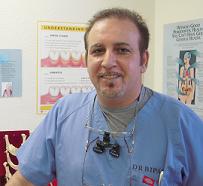
Dr. Ali Bipar
Dr. Bipar has an unusual background for a physician. He graduated with a degree in engineering from Louisiana State University in 1981 and worked as an engineer for ExxonMobil. In 1989, he enrolled in the University of Texas Dental School and graduated in 1993 with a Doctor of Dental Surgery degree. He later obtained degrees in Doctor of Periodontics and Implant Surgery, as well as Plastic and Reconstructive Surgery.
Dr. Bipar’s unique combination of medical and engineering backgrounds helped him to become one of the world’s most recognized dentists and oral reconstructive surgeons. In 2009, the American Research Council recognized him as among the top ten dental surgeons in the United States.
Dr. Bipar is a member of the American Dental Association and the International Academy of Periodontics. He teaches at the Arizona School of Dentistry and actively lectures worldwide on behalf of the International Academy of Periodontics.
Dr. Bipar utilizes various modalities for his patients, including medical massage, as part of an integrative treatment protocol for temporomandibular dysfunction, neuralgia of cranial and peripheral nerves, and other conditions.
He lives in North Scottsdale, Arizona, with his wife and two children. His hobbies are sports, cars, and travel.
Category: Medical Massage
Tags: JMS 2011 Issue #1
