
“Do you have enough expertise to break my fascia?”
Approximately five years ago, I received a call from a new patient referred by her primary care physician. Her first question was: “Do you have enough expertise to break my fascia?” Jokingly, I answered: “I’m in the business of repairing, not breaking.” Regrettably, she felt that my humor was not appropriate and angrily responded, “Boris, I have developed a myofascial tissue problem. For two months I had been seeing a fascia practitioner, but continued to feel worse. My pain started around my scapula, but now it travels all the way to my arm and hand. The pain is so intense I cannot sleep at night. Before I at least was able to sleep without pain.”
I asked her about the treatment that had been done by the practitioner. She said that he had detected fascia scarification in her upper back and shoulders. He had tried to break the fascia to release tension in her myofascial tissue. However, her case was a very difficult one, and he couldn’t succeed. At the end, she said: “My primary care physician believed that only you can break fascia scar tissue and help me.”
To tell you the truth, I don’t know how someone can even use the term “breaking fascia”. Another aspect is the widely used definition: myofascial tissue. Frequently, it is presented that the human body has this special type of tissue called myofascial tissue, which therapists and chiropractors should work with to help patients. It is a grave clinical mistake. The anatomy, physiology and histology, as well as the function, of the fascia and the skeletal muscles it covers are completely different. Yes, they can be considered as one entity only from a functional point of view.
Why is that so important? Because treating fascia and skeletal muscles as one tissue in the form of myofascial tissue is clinical nonsense. Since both types of tissue are so different, specific modalities to target each tissue separately must be used. That is the critical difference between scientifically and clinically sound Medical Massage therapy and modalities that target soft tissues in bulk.
Let’s come back to my patient. I invited her to the clinic and after the evaluation told her: “Indeed, the clinical picture you presented indicates the tension’s buildup in the fascia and muscles of your neck and upper back. However, the symptoms of pain which radiate to your arm and hand have neurological nature because muscle on your anterior neck called anterior scalene chronically irritates your brachial plexus and that causes your arm and hand pain especially at nights.”
It was a difficult clinical case, and during the first five treatments I performed connective tissue massage, fascia release and mobilization techniques, trigger point therapy, and different medical massage techniques to decompress soft tissues layer by layer. Slowly but surely, her pain level started to decrease, her sleep pattern was restored and eventually she was pain-free in the neck and upper extremity. In the following seven sessions, we addressed her middle and lower back to completely restore the biomechanical functions of her body, which had been affected by months of chronic pain and dysfunction. Since then, her neck and upper back symptoms have never returned.
Let’s Briefly Talk About Muscles/Fascia
Fascia surrounds each muscle, hosts pathways for nerves and blood vessels, participates in nutritional supply and immunological response, provides structural support for muscles, especially when they are under significant pressure, and decreases heat generation during repetitive muscle contractions. For example, when the biceps contracts and flexes the elbow, the fascia supports the biceps’ action by sharing the load. Of course, the kinesiology of elbow flexion relies on the contraction of myofibrils in the biceps brachii, but to do that the muscle also uses the stabilization function of the fascia.
Due to the negative effects of stress, physical overload, irritation of spinal nerves, etc., muscles start to build tension and shorten. When that happens, massage techniques, especially kneading in an inhibitory regime, decrease the muscle tension. It is important to remember that the decrease of tension in the fascia in combination with correct preparation of the muscles prevents already compromised muscles from going into spasm during application of passive stretching or Muscle Energy Techniques, ruining the therapist’s efforts.
Fascia doesn’t have a significant network of blood circulation. The oxygenation of the fascia heavily relies on the level of oxygenation in the muscles it covers. In such a case, the fascia breathes by the process called diffusion, when oxygen diffuses throughout the fascia from the oxygenated myofibrils. There is another important aspect of this process.
Insufficient oxygenation leads to fascial tension, and this new tension compresses the arteries and veins that are responsible for the proper oxygenation of the myofibrils; this secondary factor creates a vicious cycle of mutually reinforced fascia/muscle tension.
To successfully eliminate fascial tension, the therapist must pull and stretch the fascia in different directions using mechanical force. The best clinical tools are connective tissue massage, skin rolling, mobile cupping and decompression of the deep fascia using kneading of the deep skeletal muscles. If that is not done correctly, it is impossible to achieve stable clinical results in the elimination of muscle pain and tension and the complete deactivation of trigger points.
The clinical mistake is to target pain by itself. This is a dead end, since pain isn’t an abnormality, but rather it is an alarm system which tells the brain that the body has exhausted all tools for further compensations. Failure to understand this basic principle of somatic rehabilitation eventually brings the patient to more complex chronic pathologies like Osteoarthritis, Disk Degeneration, Tendinitis, etc.
Brief History of Fascial Work
The Austrian physical therapist Elisabeth Dicke was the first clinician who accidentally discovered the important role fascia plays in the human body. For several years, she suffered a failure of arterial circulation in her lower extremities resulting from Thromboangiitis Obliterans. The disease had progressed to the stage when amputation became a real possibility. At the same time, Dicke experienced chronic lower back pain caused by what she thought was her limping.
While repeatedly rubbing her lower back, trying to relieve tension, she noticed new sensations of warmth appear in her always cold feet. Intrigued by her finding, she tried different soft tissue mobilization techniques on her lower back and asked her colleagues to apply them. She noticed that pulling the skin on her lower back and sacrum triggered the most intense sensations of warmth in her feet. After several months of self-therapy, she was able to restore circulation through her lower extremities and prevented amputation. This is powerful stuff, isn’t it!
Dicke traveled to Berlin and shared her findings with Professor W. Kohlrausch. Their combined efforts, as well as the later works of Prof. W. Veil and Dr. Leube in Austrian and German clinics, shaped our modern understanding of Fascial Tension, its role in the development of Chronic Somatic and Visceral Pathologies and, eventually, a major method of somatic rehabilitation they called Bindegewebsmassage or Connective Tissue Massage (CTM).
During the following years, the basic concept was further extended and improved. Different variations of the original techniques were introduced, for example, skin kneading and work on the deep fascia. The CTM is physically challenging to the therapist’s hands and fingers. To avoid that while preserving the integrity of fascial work, we combined CTM with Mobile Cupping. Thus, we were able to secure the scientific value of CTM while giving therapists easier access to this important method of somatic rehabilitation.
Example of Fascia Mobilization using Mobile Cupping.
ABOUT THE AUTHOR
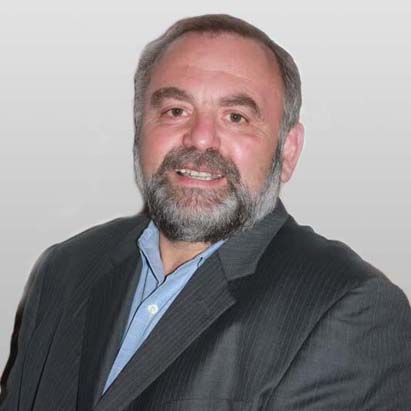
B. Prilutsky, LMT, MA
Boris Prilutsky has practiced and taught Medical and Sports Massage for more than 30 years. He has a master’s degree in physical education and rehabilitation from Ukraine.
Boris has worked with athletes and world dignitaries throughout Europe, Israel and the USA. He has trained thousands of therapists worldwide. Boris Prilutsky has published extensively on various topics of physical medicine and rehabilitation. Readers may learn more on his main educational website: Medical Massage Education
Category: News
Tags: JMS 2020 Issue #1
