
INTRODUCTION
Therapists are on an endless quest to help patients/clients suffering from various forms of somatic pain and dysfunction. Massage schools, countless continuing education classes, and numerous textbooks attempt to provide clinical training—each limited by the educator’s scope and perspective. However, one critically important component of rehabilitation is consistently overlooked: recognition and management of the patient’s brain defense mechanisms.
In clinical reality, patients with chronic pain present more than isolated complaints such as headaches, shoulder pain, or low back pain alone. Chronic noxious stimulation from peripheral receptors continuously bombards the central nervous system. Beyond generating persistent pain, this ongoing afferent input alters brain function itself. To protect against overwhelming nociceptive input, the brain activates defensive strategies known as brain defense reactions.
These defense mechanisms are not psychological curiosities—they are functional neuroprotective responses. In clinical practice, the brain most commonly employs the following mechanisms:
- Anger
- Regression
- Hypochondria
- Fear
- Denial
- Projection
- Rationalization
- Emotional instability
The vast majority of patients suffering from chronic pain exhibit at least one of these mechanisms. As therapists, we must learn to recognize the visual, behavioral, and emotional signs of brain defense reactions and adjust our clinical behavior accordingly. Failure to do so significantly slows the rehabilitation process—or results in only partial and unstable outcomes. Only by reducing or eliminating these defense reactions can we shut down the Neuromatrix, which is partly responsible for the continuous production of chronic pain sensations. Here is a link to the JMS article about Neuromatix and its critical role in the formation of chronic pain:
During SOMI’s Medical Massage Certification Program, we use a simple but powerful analogy to explain this concept. Many are familiar with the idiom “the monkey on the shoulder,” originally introduced in business management literature in 1974. The phrase describes persistent stress or burden. This analogy applies remarkably well to patients with chronic pain.
We all carry our own “monkey” due to daily stressors and anxieties. However, in patients with chronic pain, the brain’s defense mechanisms profoundly influence the treatment process. If the healthcare practitioners fail to modify their behavior, the patient’s brain perceives the therapist not as an ally, but as an intruder.
In other words, we must give the banana to the monkey first by adjusting OUR behavior!
Only after the brain recognizes the therapist as a safe and understanding partner can it relax its defensive posture and dismantle guards. This step is not optional—it is the first and necessary phase of effective therapy.
SOMI has published a two-part article in the Journal of Massage Science dedicated to this subject. These articles examine each brain defense mechanism from the therapist’s perspective, illustrated through real clinical cases from our clinic. They provide practical guidance for recognizing defense reactions and adjusting therapeutic behavior to achieve stable clinical outcomes.
and
The clinical case presented below, submitted by SOMI’s former student Curt Lezanic, LMT, CMMP, is an excellent illustration of this rehabilitation principle in action. Additionally, we invited Brenda Howell, LMT, CMMP, founder of an Institute for Massage and Bodywork Therapy in Fayetteville, NC (IMBT), and a former SOMI student, to share her perspective on this topic from both clinical and educational perspectives. Her insights are in the Afterword to this article.
For therapists seeking true and lasting clinical results, understanding and addressing brain defense mechanisms is not optional—it is essential.
Dr. Ross Turchaninov
JMS‘s Editor in Chief
KNEE REPLACEMENT WITH PSYCHOLOGICAL TWIST
(Brain Defense Mechanisms)
By Curt Lezanic, LMT, CMMP
As one continues to learn and practice Medical Massage, we are periodically challenged by unusual clinical cases—and by unusual patients. In my own practice, I developed a reputation for working with individuals who had undergone knee replacement surgery but were not making progress in physical therapy. The following is the story of one such case.
I received a call from a 55-year-old construction worker who had undergone knee replacement surgery and was unable to either extend or flex his knee. We scheduled an evaluation.
When he arrived, two things immediately caught my attention. First, the length of his surgical scar was highly unusual for a knee replacement—almost twice the typical length. Second, there was a complete lack of knee joint mobility (Fig. 1).
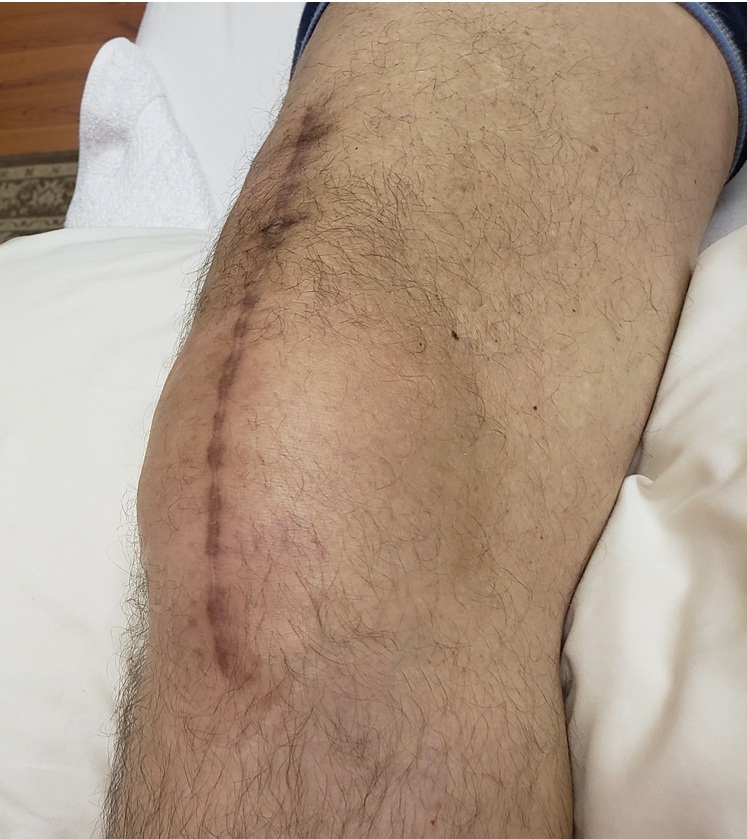
Fig. 1. Patient’s knee and its position following surgery and lack of rehabilitation
We sat down and discussed his history. Several months earlier, he had fallen from a ladder and fractured his femur. X-rays revealed not only the fracture but also a tumor in the femur above the knee joint. The fracture was therefore pathological, caused by bone weakened by the tumor. The femur fracture was externally stabilized, and the patient was referred to an oncologist. A biopsy performed one week later confirmed that the tumor was malignant.
As part of his cancer treatment, the tumor was surgically removed. Because the fracture occurred at the tumor site, a section of bone above the knee, along with the knee joint itself, was removed and replaced with an endoprosthesis.
The surgery was successful, and the patient was referred to physical therapy for rehabilitation. This is where the story becomes particularly interesting.
The patient was completely non-compliant. He told me that he constantly argued with the physical therapists and refused to perform the prescribed exercises. This behavior continued for approximately one month, after which the physical therapy clinic discharged him. He was then referred to a second physical therapy group, where the same scenario occurred.
By the time he came to my office, more than two months had passed since surgery, with essentially no rehabilitation. He sat in front of me, explaining what he would and would not do. He spoke to me in the most hostile manner possible. I immediately understood why two different physical therapy groups had dismissed him. To say that our initial conversation was “interesting” would be a gross understatement.
I am a former SOMI student and a regular reader of the Journal of Massage Science. After reading JMS articles on Brain Self-Defense Mechanisms, I came to understand the critical importance of addressing the psychological component in patients under extreme health stress.
For therapists seeking to support patients in complex and severe health situations, I strongly recommend reading the two-part JMS article on brain self-defense mechanisms.
The patient’s brain employs various psychological self-defense reactions to cope with stress triggered by pain, trauma, and uncertainty. The individual sitting in front of me was not inherently unpleasant; he was psychologically traumatized by a fracture, a cancer diagnosis, a major surgery with an uncertain future, and failed rehabilitation—partially due to his own behavior. His brain had chosen anger as a defense mechanism. Without addressing this reaction, no therapeutic intervention could succeed.
So, the patient’s brain continues looking for professional help, but its own protective reaction, generated as a result of pain and dysfunction, prevents him from cooperating with all health practitioners who did not consider the brain’s defense mechanism of anger as a real obstacle.
To change the direction of our interaction, I first explained his current condition in straightforward terms. I needed to establish professional authority, then told him that what I was offering was his last opportunity for recovery. If he wasted another week or two, he would permanently lose knee function. I realized I needed to strongly confront his anger, so I ended my short speech by looking directly into his eyes and firmly saying:
“You can leave my clinic right now, but never try to contact me again expecting my help. What is your decision?”
At that moment, I could see a clear shift in his mental state. After a brief silence, he said that he would work with me. From that point forward, I was entirely in charge of his rehabilitation—with his complete cooperation.
TREATMENT
We began with lymphatic drainage. The patient had significant edema in the affected leg, and I treated him several times per week for the first couple of weeks to bring the swelling under control.
As the edema decreased, we gradually began addressing the knee joint itself. Session by session, the range of motion slowly improved. Knee flexion increased to approximately 90 degrees, while extension progressed more slowly.
As the patient observed clear improvements in both range of motion and pain reduction, he began taking responsibility for his recovery. He joined a gym and consistently performed the home exercises I prescribed.
Once the edema was largely resolved, I shifted focus to the soft tissues of the leg and thigh. As expected, the skin and fascia no longer presented significant restrictions. However, the muscles—particularly above the knee—were a different matter.
Examination revealed dysfunction in the lumbar erector spinae and quadratus lumborum due to compensatory gait patterns. The quadriceps, adductors, hamstrings, and posterior leg muscles were extremely tight, with multiple active trigger points that severely restricted knee range of motion.
From this point forward, each session followed a structured protocol:
- Effleurage of the lumbar region, gluteal area, thigh, and leg, directed toward lymphatic drainage
- Layer-by-layer decompression of the lumbar musculature, followed by Trigger Point Therapy applied to the erector spinae and quadratus lumborum
- Lower extremity drainage
- Application of friction and kneading techniques to superficial and deep skeletal muscles of the thigh and posterior leg
- Trigger Point Therapy applied to active points
- Post-isometric muscular relaxation techniques
- Passive stretching and rhythmic flexion and extension of the knee and ankle joints
The patient responded exceptionally well to the treatment.
I also assigned detailed home exercises, including muscle stretching and appropriate use of gym equipment. I gave the patients proper homework from SOMI’s YouTube Channel: Dr. Ross | Medical Massage – YouTube
TREATMENT OUTCOMES
After approximately six weeks of consistent work together, I informed the patient that he no longer required treatment. The edema had fully resolved. He could flex the knee to 70 degrees without pain, and knee extension was fully restored.
Let us consider the alternative scenario: if the patient had not contacted me, and I had not been familiar with JMS‘s publications on brain self-defense mechanisms. Most likely, he would have lost functional use of the knee and lower extremity, lost his ability to work, and become permanently disabled.
This case illustrates why therapists must treat not only pain and somatic dysfunction, but also understand how to address a patient’s psychological state from a somatic perspective. While treating the body, we must simultaneously influence the patient’s perception of their condition—because without that shift, proper rehabilitation is impossible.
AFTERWORD
This case study illustrates a reality many practitioners encounter, but few are adequately trained to navigate: the brain does not always present distress in a predictable way. Psychological defenses—whether expressed as anger, regression, dissociation, or other behaviors—are NOT conscious choices made by the client. They are adaptive strategies shaped by the brain to maintain safety.
In this case, the client’s behavior had repeatedly been misunderstood and misinterpreted as inappropriate rather than recognized as a defensive response. As a result, he was dismissed from multiple practices, not because he was unwilling to receive care, but because he psychologically required a different approach. The turning point was not a new technique or modality, but the practitioner’s ability to recognize what was happening neurologically and respond with intention rather than reaction.
I witnessed another case with my own student, Molly. Shortly after graduating from our massage school and obtaining her license, she began working with a client in our clinic who would randomly speak but act in a childlike manner. Although this client was a highly accomplished professional, she had also experienced multiple physical and emotional traumas during her military career. Because of the training Molly had received from SOMI and IMBT, she was well equipped to recognize and respond appropriately to the client’s shifts in behavior and attitude.
Other practitioners who worked with this client before had failed to recognize these behavioral changes, misinterpreting them as noncompliance, difficult, and just ‘weird’, which ultimately hindered the client’s care. We learned that she had previously been dismissed from several clinics in the area and had even been labeled a “problematic patient” by the VA. After Molly was able to overcome the client’s brain defense reaction – Regression, she started to recover, and medical massage therapy eliminated her symptoms.
Curt and Molly’s responses underscore why education in psychological defense mechanisms is not optional for students pursuing medical massage. Without this knowledge, practitioners may inadvertently escalate a client’s defense, reinforce patterns of rejection, intensify chronic pain, or terminate care. With it, therapists can maintain therapeutic boundaries while meeting the client’s nervous system where it is, allowing treatment to proceed safely and effectively.
Understanding psychological defenses equips therapists to differentiate between behavior and intent, symptom and strategy. It fosters compassion without sacrificing professionalism, and confidence without rigidity. Most importantly, it protects both the client and the practitioner, creating space for healing rather than retraumatization.
For students, learning how the brain creates and maintains psychological defenses is not simply academic—it is foundational. It transforms confusion into clarity, frustration into competence, and difficult encounters into opportunities for meaningful therapeutic work.
Brenda Howell, LMT, CMMP
Massage School – Institute for Massage and Bodywork Therapy
Join SOMI’s Medical Massage Certification to help patients in very complex clinical situations when traditional and alternative modalities often fail: Medical Massage Courses & Certification | Science of Massage Institute » Medical Massage Continuing Education
A great first step is to take a Live Webinar on Medical Massage Techniques on February 21-22: Medical Massage Courses & Certification | Science of Massage Institute » SOMI’s MM Techniques Webinar February 21-22, 2026
If you are on the East Coast, don’t miss SOMI’s hands-on training in Soft Tissue Evaluation and three Medical Massage Protocols, in Fayetteville, NC, on March 6-8: Medical Massage Courses & Certification | Science of Massage Institute » Fayetteville, NC March 6-8, 2026
ABOUT THE AUTHOR
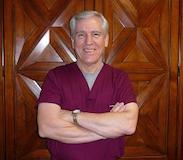
Of all the things I have learned in my twenty-plus years in massage therapy, let me repeat: all of it pales in comparison to what I have learned through SOMI’s training in Medical Massage.
Medical Massage provides me with the education and experience to address the void often experienced by patients in pain. These patients’ conditions are not severe enough for a surgical intervention, and at best, are offered only minimal relief through various painkillers and muscle relaxants. This is the area between pain medications, muscle relaxants, and surgery in which I work. Medical Massages provides me with the tools to achieve clinically stable, highly effective relief. I cannot understate the effectiveness of the MEDICAL MASSAGE PROTOCOLs.
I am very excited that Dr. Ross Turchaninov, through the Science of Massage Institute, is offering a certification in Medical Massage Therapy. Our industry needs this, and our patients deserve it. I want to encourage more massage therapists to learn and adopt Medical Massage. I should not be the only massage therapist in San Antonio, Texas, practicing this modality. To those considering learning this, I can assure you that the financial and personal rewards are well worth the effort.
Category: Medical Massage
Tags: 2025 Issue #3
